Default Theme
AIIMS NEW
अखिल भारतीय आयुर्विज्ञान संस्थान, नई दिल्ली
All India Institute Of Medical Sciences, New Delhi
कॉल सेंटर:  011-26589142

Research Project

 
Research Overview
 
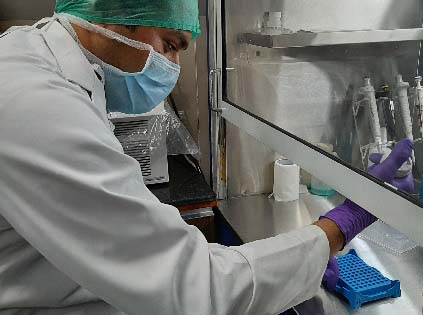
Prof. Ritu Gupta's research lab is focused on translational hemato-oncology and precision medicine, integrating advanced hematopathology, flow cytometry, molecular genomics, single-cell technologies, artificial intelligence, and computational approaches to address clinically relevant challenges in hematological malignancies.Her research programme brings together laboratory and clinical expertise to improve the diagnosis, risk stratification, disease monitoring, and treatment of patients with acute myeloid leukemia (AML), multiple myeloma (MM), and other hematological malignancies. A major emphasis is placed on understanding disease heterogeneity, clonal evolution, therapeutic resistance, and measurable residual disease, with the goal of translating technological advances into clinically useful diagnostic and prognostic tools.
 
Major Research Areas
  1. Acute Myeloid Leukemia and Leukemic Stem Cells
Research focuses on the characterization of leukemic stem cells and their molecular, epigenetic, immunological, and microenvironmental features. Single-cell and multi-omics approaches are being used to understand cellular heterogeneity, clonal evolution, disease progression, relapse, and mechanisms of therapeutic resistance in AML.
  1. Multiple Myeloma and Clonal Evolution
Research in multiple myeloma focuses on genomic characterization, clonal evolution, subclonal architecture, and genetic determinants of treatment response and disease progression. Advanced genomic approaches are being applied to identify biomarkers with prognostic and therapeutic relevance and to support individualized patient management.
  1. Minimal Residual Disease and Advanced Diagnostics
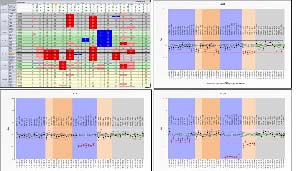
The laboratory is developing and validating highly sensitive approaches for measurable residual disease (MRD) assessment using multiparametric flow cytometry, molecular methods such as next-generation sequencing, ddPCR and q-PCR, and image-based analysis. These efforts aim to improve the sensitivity, reproducibility, and accessibility of disease monitoring in haematological malignancies.
  1. Artificial Intelligence and Computational Hematopathology
Artificial intelligence, machine learning, deep learning, and computational genomics are increasingly integrated into the research programme. These approaches are being explored for risk prediction, biomarker discovery, image-based diagnosis, genomic data interpretation, disease classification, and clinical outcome prediction, with a particular focus on developing clinically relevant and resource-sensitive solutions for Indian patients.
  1. Precision Hemato-Oncology and Translational Genomics

The research programme integrates next-generation sequencing, single-cell analysis, molecular profiling, and high-dimensional flow cytometry to develop a deeper understanding of hematological malignancies. The overarching goal is to translate these findings into precision diagnostics, prognostic models, treatment-response assessment, and personalized therapeutic strategies. 
Zo2 Framework Settings

Select one of sample color schemes

Google Font

Menu Font
Body Font
Heading Font

Body

Background Color
Text Color
Link Color
Background Image

Header Wrapper

Background Color
Modules Title
Text Color
Link Color
Background Image

Menu Wrapper

Background Color
Modules Title
Text Color
Link Color
Background Image

Main Wrapper

Background Color
Modules Title
Text Color
Link Color
Background Image

Inset Wrapper

Background Color
Modules Title
Text Color
Link Color
Background Image

Bottom Wrapper

Background Color
Modules Title
Text Color
Link Color
Background Image
Background Color
Modules Title
Text Color
Link Color
Background Image
 
Top of Page
BCMath lib not installed. RSA encryption unavailable